
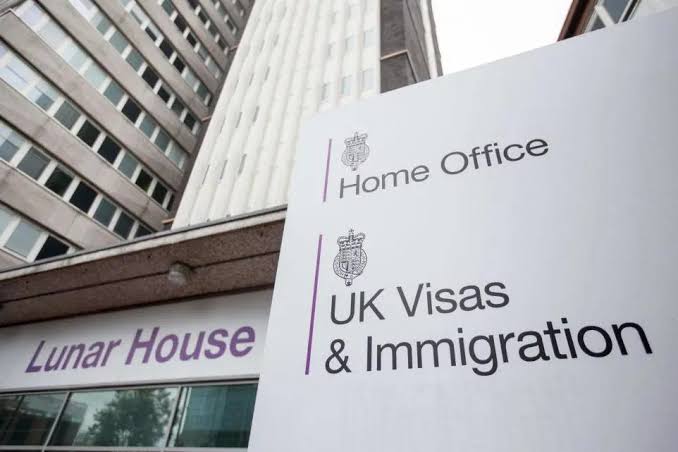
The United Kingdom (UK) Home Office is under fire as Universities across the UK are raising the alarm over a sharp rise in student visa refusals for what they described as “crazy” and “farcical” reasons.
One of the ‘crazy’ reasons for visa refusals involved an overseas applicant who was rejected after failing to state the number of trees on a university campus in the UK.
The complaints come amid a Home Office immigration crackdown and stricter rules for university sponsors. Refusal rates have more than doubled in early 2026, leaving institutions struggling to recruit international students whose fees help fund domestic education.
According to university leaders, UK Visas and Immigration (UKVI) is increasingly using discretionary “credibility interviews” to assess whether applicants are genuine students. These interviews have produced a string of disputed decisions.
James Miller, vice-chancellor of the University of the West of Scotland (UWS), cited one case in which an applicant was refused for being unable to “describe the number of trees” on campus. University marketing materials had highlighted the greenery, and officials reportedly expected the applicant to know the detail.Inews
Other reported examples include:
- An applicant rejected for supposedly giving the wrong founding year of their university — later shown to be correct.
- A student refused after saying they considered Canada but chose the UK for its course reputation; the refusal letter criticised them for not applying to Canada.
- Another applicant who mentioned Canada’s cold weather was told some parts of Canada are not that cold.
- A University of East Anglia applicant who correctly named Norfolk as the location was refused after the caseworker appeared to confuse Norfolk with Norwich.
Reacting to the crazy reason for visa refusals, Vivienne Stern, chief executive of Universities UK, said institutions are sharing cases that are “bizarre” and “just don’t make sense”.
“It’s killing us,” she said. “It’s making it very hard to predict which students will be given a visa and which will not.
“It’s forcing universities to be incredibly risk-averse about how they recruit international students, and it is a large reason why we’ve seen such a decline this autumn.”
More than 13 per cent of student visas were rejected in the first three months of this year, up from 6.1 per cent during the same period last year.
UK Visas and Immigration (UKVI), the Home Office body responsible for processing visas, carries out discretionary “credibility interviews” to check that applicants’ study plans are genuine.
Universities see these interviews as an expanding source of questionable visa rejections.
Stern added: “It’s crazy. One of the things that we’ve been asking for in every conversation we’ve had with government is: can you look at the quality of decision-making? We want to play by the rules, but the rules have to be fair.”
James Miller, vice-chancellor of the University of the West of Scotland (UWS), said one applicant was told they were rejected because they were unable to “describe the number of trees” on a university campus.
It was deemed that the university’s marketing had prominently displayed its greenery and that this should have been known to the applicant, according to another source familiar with the case.
Miller said many applicants are getting rejected because they had not considered other English-speaking countries.
One applicant to UWS was rejected because they had not applied to Canada after saying they had considered it, but chose the UK due to the course’s reputation.
In another case shared by Universities UK, a student said during an interview they had considered studying in Canada but not applied because of the cold weather. The visa was rejected, with a letter explaining that some places in Canada are not that cold.
Miller claimed it is becoming clear to universities that rejected applicants typically come from a very small number of countries, such as India, Pakistan, Bangladesh, Nigeria and Ghana.
Student visas were banned outright from Afghanistan, Cameroon, Myanmar and Sudan earlier this year because officials believed these nationals were more likely to apply for asylum once they had arrived in the UK.
Universities said they are now withdrawing visas from prospective overseas students over concerns that spurious refusals are putting them in danger of getting sanctioned by the Home Office.
New rules that came into force in June punish universities if more than 5 per cent of their sponsored study visas are rejected – down from 10 per cent before.
If institutions exceed this threshold, they could have their ability to recruit international students removed entirely.
“Students don’t actually have any opportunity to appeal the decision other than based on a factual inaccuracy, and that costs the student money as well,” Miller said. “Very often they decide not to pursue it any further because they feel the odds are all stacked against them.”
Other overseas students are facing long delays in getting their visas and are unable to get them in time for their course, he added.
Steven McGuire, deputy vice-chancellor at the University of East Anglia (UEA), said his university has cut back on actively recruiting students from countries such as Pakistan and those in West Africa, and is having to turn away legitimate students “because we can’t risk a visa refusal”.
He said some of the rejection reasons “seem very strange”. One applicant who cited international rankings as a reason for choosing UEA was refused because the rankings were public information and any candidate could say that.
In another example, the applicant correctly said UEA was in Norfolk, but the caseworker appeared to confuse Norfolk with Norwich and rejected the application.
McGuire said: “Suddenly students, who in previous years would have passed and would have studied, were failing at quite remarkable rates at the compliance interview. There was clearly a change in the thresholds which wasn’t communicated to universities.”
Nick Hillman, director of the Higher Education Policy Institute think-tank, added it was “abundantly clear” that officials doing the interviews are “not fit for the job”.
“It is the next migration scandal waiting to happen, because the way they’re doing it is so egregious,” he said.
A Government spokesperson said all applications “are considered on their individual merits in line with the requirements of the immigration rules”. They have “robust controls and checks” to protect the immigration system from abuse.
They added that universities “have only been provided with cherry-picked extracts [from visa refusals], which may not reflect the full rationale and are insufficient to support an investigation into these specific cases”.