
South Africa has deported 38,982 undocumented foreign nationals between April 1 and October 31, 2026, according to official figures.
This is as anti-migrant protesters staged fresh demonstrations specifically demanding a ban on Nigerians entering the country.
Justice and Constitutional Development Minister Mmamoloko Kubayi, who chairs the Inter-Ministerial Committee on Migration, announced the total during a briefing on Thursday.
Of the nearly 39,000 people deported from South Africa, 31,878 were processed through the Lindela Repatriation Centre in Krugersdorp, with the remaining 7,104 handled through provincial operations.
Kubayi stressed that deportations continue under strict legal processes and rejected claims that enforcement had slowed.
“Sometimes people think that we have stopped deportation. We haven’t stopped deportation. Deportation continues,” Kubayi said.
She said 7 104 deportations had been processed through provincial operations, while 31 878 had been processed through centres.
Government is also intensifying enforcement through Operation Shanela. Kubayi said 2 593 suspects were arrested for contravening the Immigration Act between October 26 and November 8, followed by another 1 777 arrests between November 9 and 15.
Fingerprint-screening technology used during operations enables officers to identify wanted suspects and check the immigration status of people encountered during raids.
The latest figures follow previous reports on the government’s deportation and detention operations.
The figures on the people deported from South Africa coincided with renewed anti-migrant activism.
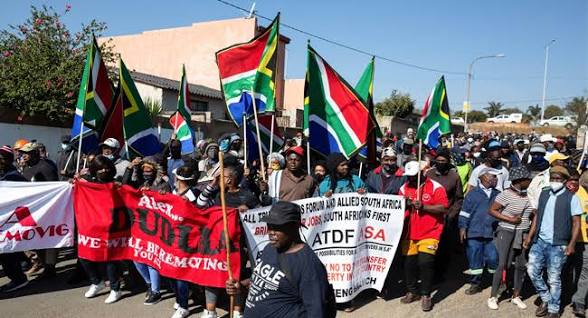
Pan-Atlantic Kompass reports that members of the March and March group marched through Pretoria’s Sunnyside suburb, an area with a large Nigerian community often nicknamed “Little Lagos”, calling for a complete ban on Nigerian nationals entering South Africa, the deportation of undocumented migrants, tighter refugee admissions, and South Africa’s withdrawal from the 1951 UN Refugee Convention.
Addressing the crowd during the demonstration, Xolani Zuma, legal head of the March and March Movement and husband to group leader Jacinta Ngobese-Zuma, accused foreign nationals of fueling crime and drug trafficking.
“I’m being told here that we’ve entered Sunnyside, the home of Nigerians. I’m inviting Nigerians to come out; let’s talk to each other. We want to know who gave you this place and called it Nigeria. Who gave you permission to call this place Lagos or whatever you call it?” Ngobese-Zuma asked.
“Who called you here and gave you permission to call our country Lagos?”
Xolani Zuma, March and March legal representative, called for an entry ban on Nigerians.
“The state must ban Nigerians from South Africa. They must ban Nigerians until they stop selling drugs to our people. The rest of Africa we are fine with, but we do not want Nigerians in South Africa anymore; that is what we are saying,” Zuma said.
Ngobese-Zuma also demanded South Africa’s withdrawal from the 1951 Convention relating to the status of refugees.
The core principle of the 1951 UN Convention is non-refoulement, which asserts that a refugee should not be returned to a country where they face serious threats to their life or freedom.
Ngobese-Zuma described the treaty as “not sustainable and not feasible”, saying migrants place additional pressure on public resources and fuel frustration among South African citizens.
She said the demonstrators were marching to the Home Office to place their demands.
The protests follow a period of heightened diplomatic tensions between Nigeria and South Africa.
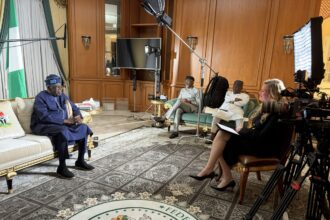
Just last week, the Nigerian high commission and South African presidency traded words over the exclusion of Femi Fani-Kayode’s speech during his presentation of credentials as high commissioner.
The high commissioner described the omission as disrespectful to Nigeria but said the incident had been put behind following President Cyril Ramaphosa’s intervention and an invitation from the Department of International Relations and Cooperation (DIRCO) over the row.
Fani-Kayode said from the time he arrived in South Africa, he began to look into some of the issues that concern the Nigerian community.
He described those responsible for xenophobic attacks in South Africa as a “tiny minority”, saying they do not represent the majority of South Africans, whom he characterised as decent and accommodating people.
Over 1,500 Nigerians were repatriated from South Africa this year over xenophobic attacks that left at least four Nigerians dead.
Fani-Kayode has said Nigeria will not sever ties with South Africa, but warned that patience was growing thin within the corridors of power.