
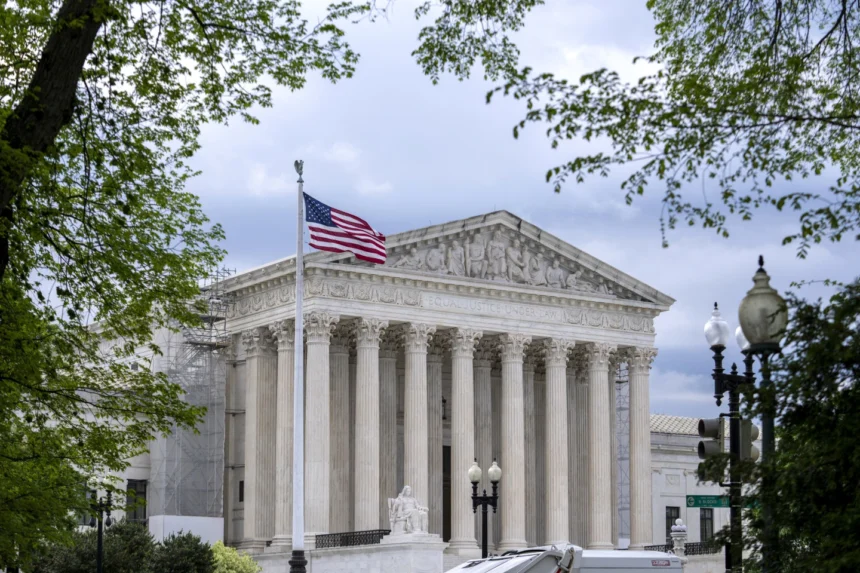
The United States officially entered a partial government shutdown on Saturday, January 31, 2026, after Congress failed to finalize a multi-billion-dollar spending package before the January 30 deadline.
While the Senate passed a bipartisan deal in the late hours of Friday, the House of Representatives is not scheduled to vote on the measure until Monday, leaving several major federal agencies without authorized funding through the weekend.
The current partial government shutdown was triggered by a collapse in negotiations primarily centered on Department of Homeland Security (DHS) funding.
Tensions escalated following recent incidents involving federal immigration agents in Minneapolis, leading to demands for stricter oversight and body-camera mandates.
While essential services such as air traffic control, border security, and law enforcement remain operational, thousands of non-essential federal employees will be affected by the partial government shutdown.
Dozens of federal agencies saw their funding lapse at 12 a.m. Saturday, kicking off a partial government shutdown.
The effects of a partial shutdown will be minimal if the House can finalize the plan early next week.
The shutdown could be short-lived and have few tangible effects if the House swiftly approves a funding deal that was passed by the Senate on Friday. The lower chamber is expected to sit on Monday.
It was also gathered that the administration of U.S President Donald Trump is working to avoid a prolonged shutdown like the one that lasted 43 days last year.
In a memo to department heads on Friday, the director of the Office of Management and Budget directed affected agencies whose funding will lapse at midnight to begin preparing for a shutdown.
Those include the departments of Defense, Homeland Security, State, Treasury, Labor, Health and Human Services, Education, Transportation, and Housing and Urban Development, among others.
“As it is now clear that Congress will not complete its work before the expiration of appropriations, affected agencies should now execute plans for an orderly shutdown. Employees should report to work for their next regularly scheduled tour of duty to undertake orderly shutdown activities,” the letter from Russ Vought said.
“The Administration will continue working with Congress to address recently raised concerns to complete appropriations for Fiscal Year 2026. We hope that this lapse will be short,” Vought said.
Also, the United States Mission in Nigeria has announced that it will temporarily suspend regular updates on its official X account due to a lapse in government appropriations, assuring, that passport and visa services will continue as the situation permits.
The Mission made this known in a post shared on its verified X handle, @USinNigeria, on Saturday.
According to the statement, the account will not be updated regularly until full operations resume, except for urgent safety and security information that may be necessary for the public.
“Due to the lapse in appropriations, this account will not be updated regularly until full operations resume, except for urgent safety and security information,” the post read.
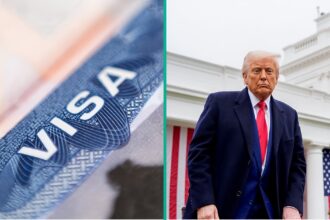
Despite the funding challenges, the Mission clarified that scheduled passport and visa services in the United States and at US embassies and consulates overseas would continue, depending on how the situation unfolds.
“At this time, scheduled passport and visa services in the United States and at US Embassies and Consulates overseas will continue during the lapse in appropriations as the situation permits,” the Mission stated.
The U.S Mission also noted that further updates would only be provided once full operations resume, except in cases involving urgent safety or security matters.
It advised members of the public seeking information on services and operating status to visit the official U.S travel website.