
The United States (U.S) has begun shutting down embassies in the Middle East as regional tensions escalate into open conflict.
Following the launch of Operation Epic Fury, a joint U.S.-Israeli military campaign against Iran, the administration of U.S President Donald Trump has also ordered the evacuation of non-essential personnel from diplomatic hubs in Saudi Arabia, Kuwait, and the UAE.
This mass withdrawal signals a pivot toward a high-intensity military posture, leaving the region on edge as security alerts reach their highest possible levels.
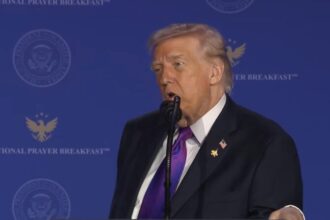
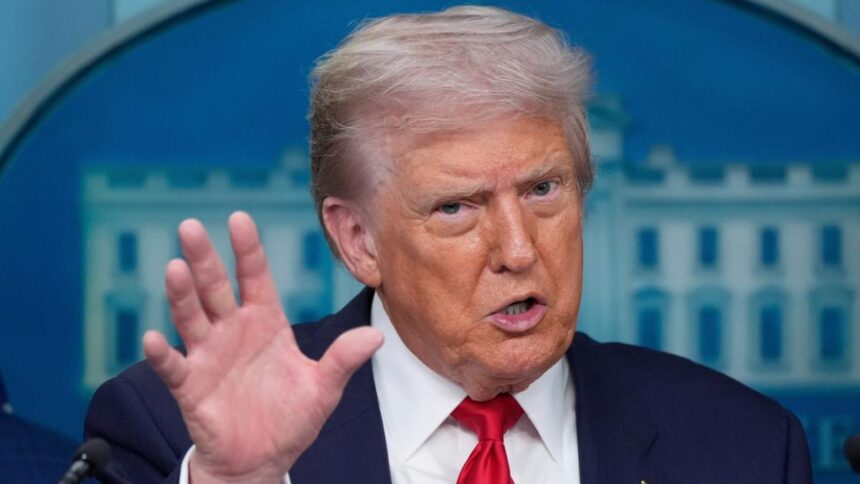
Trump, speaking from the Oval Office, has indicated that the current military operations are not merely a short-term surgical strike.
While initial estimates suggested a four-to-five-week window for the neutralization of Iranian nuclear and missile infrastructure, the President warned that the United States is prepared for a “prolonged” engagement to ensure total regime change.
Trump on Tuesday also said that Tehran is seeking talks with the U.S as military operations against Iran continue but indicated he believes the opportunity for negotiations has passed.
“Their air defense, Air Force, Navy, and leadership are gone. They want to talk. I said, ‘Too Late!’” Trump wrote in a Truth Social post.
Trump’s latest comments come days after he suggested over the weekend, however, that he agreed to engage in talks with Iranian leaders following the start of U.S and Israeli strikes.
“They want to talk, and I have agreed to talk, so I will be talking to them,” Trump said Sunday. “They should have done it sooner.”
Pan-Atlantic Kompass reports that Trump’s comment, coupled with the shutting down of U.S embassies in the Middle East have sparked fears of a prolonged war with Iran.
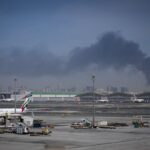
Already, the U.S Embassy in Kuwait announced it would remain closed until further notice after the Bayan compound was hit during an Iranian attack on Monday.
The announcement came shortly after Iran attacked the U.S Embassy in Kuwait, the country’s state news agency said on Tuesday. Earlier, the U.S. said it was shutting the embassy, citing “ongoing regional tensions.”
“The State of Kuwait rejects and condemns in the strongest terms the brutal Iranian attack that targeted the building of the United States Embassy in the country, considering it a flagrant violation of all international norms and laws,” the Kuwait News Agency said.
The same report said the Kuwaiti Foreign Affairs Ministry would “take all necessary measures and actions to protect its security, the safety of its territories, its citizens, and the residents therein.”
Likewise, the U.S Embassy in Saudi Arabia said it would remain closed on Tuesday following two overnight drone strikes that caused “limited damage”, per Saudi defence ministry reports.
The U.S Embassy in Saudi Arabia also warned of an “imminent missile” attack over Dhahran, an eastern city off the Persian Gulf that is home to an American consulate and the state oil producer Saudi Aramco.
“There is a threat of imminent missile and UAV attacks over Dhahran,” the embassy said in a post on X. “Do not come to the U.S. Consulate.”
The embassy advised U.S. citizens in Dhahran not to go outside and to shelter in place. The warning comes after the embassy in Riyadh, Saudi Arabia, was shut following an attack by two drones overnight.
Aside shutting embassies in the Middle East, the U.S State Department also warned Americans to steer clear of U.S military sites and embassies across the Middle East, issuing urgent departure notices for 14 countries, including Bahrain, Egypt, Iran, Iraq, Israel and the occupied Palestinian territories, Jordan, Kuwait, Lebanon, Oman, Qatar, Saudi Arabia, Syria, the UAE, and Yemen.
Pan-Atlantic Kompass reports that the ongoing crisis is compounded for the U.S as the country lacks Senate-confirmed ambassadors in multiple Middle East countries, including Saudi Arabia, the UAE, Qatar, Egypt, Kuwait, and Iraq, despite their centrality to the ongoing regional war with Iran.
Instead, chargés d’affaires are managing these missions, an arrangement that critics argue leaves Washington diplomatically isolated as it urges citizens to flee the region and evacuates non-essential staff from multiple outposts.
Even the U.S Embassy in Jerusalem, which has an ambassador, said it cannot directly assist Americans evacuating Israel due to the closure of Ben Gurion Airport, and citizens were advised to use Egypt’s Taba crossing, though “the US government cannot guarantee your safety”.
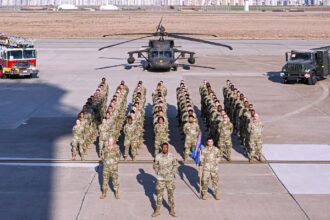
In a similar development, the U.S has unveiled plansto send additional forces to the Middle East.
Joint Chiefs Chairman Gen. Dan Caine said the U.S was working to move more air defence assets to the region while bolstering its forces, though U.S Central Command did not specify troop numbers. Approximately 50,000 service members are already believed to be involved in the conflict.
Secretary of State Marco Rubio addressing a press conference said: “The next phase will be even more punishing on Iran than it is right now”.