
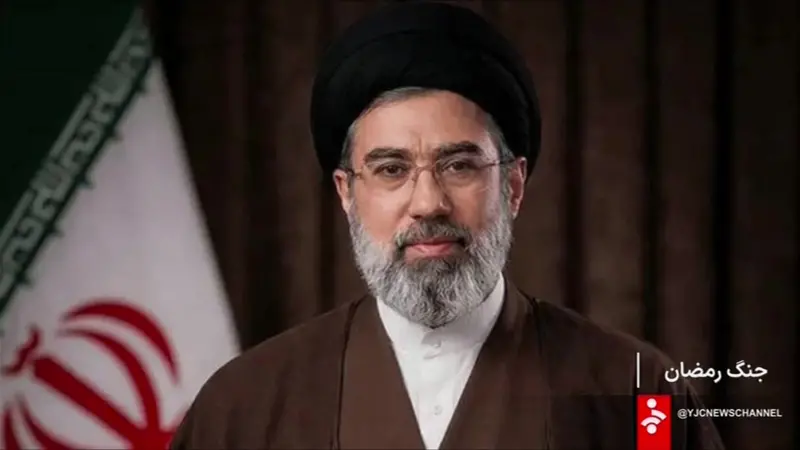
Iran’s new Supreme Leader, Ayatollah Mojtaba Khamenei has defied calls by United States President Donald Trump over the continued closure of the Strait of Hormuz.
Iran’s new Supreme Leader defied Trump by vowing to maintain a stranglehold on the world’s most critical oil chokepoint.
Mojtaba Khamenei, making his first official statement since the death of his father, Ali Khamenei, confirmed Thursday that the Strait of Hormuz will remain “effectively closed” as leverage against the United States and its allies.
The announcement was read by a state television anchor as the 56-year-old leader has yet to appear on camera.
Since the conflict escalated in late February 2026, the global supply of oil and liquefied natural gas (LNG) has been thrown into chaos.
By declaring that the waterway is a legitimate tool of “military resistance,” Iran’s new Supreme Leader defied Trump and his administration’s demands for the immediate “free flow of energy.”
”The leverage of blocking the Strait of Hormuz must continue to be used,” the statement read. “I recommend that regional governments shut down U.S. bases as soon as possible, as their claims of providing peace are nothing more than a lie.”
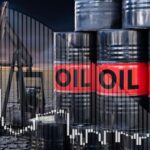
The impact on the pump was immediate. Following the broadcast Brent Crude surged 9%, crossing the $100-per-barrel threshold.
Shipping insurance premiums have skyrocketed, with many firms declaring the Gulf of Oman a “no-go zone.” Also, global supply chains are bracing for a 10-to-14-day delay as tankers are forced to reroute around the Cape of Good Hope.
During the address, Mojtaba Khamenei also vowed to attack any U.S., Israeli, or allied ship that dares to cross the narrow strait, which sees one-fifth of the world’s oil pass through it each year.
The supreme leader added that Iran will “avenge the blood” of the 170 people, mostly children, who were killed in a likely U.S strike on an elementary school.
Recall that the Shajareh Tayyebeh elementary school in Minab was struck on the first day of the U.S.-Israeli assault, according to a U.S. official and three sources familiar with the preliminary findings of a U.S. military investigation.
“I assure everyone that we will not abandon the pursuit of justice for the blood of your martyrs,” Mojtaba Khamenei said in his first message in office.
He said particular vengeance would be carried out for “the blood of our children,” and that “the crime deliberately committed by the enemy against the Shajareh Tayyebeh school in Minab, and similar cases, will receive particular attention.”
The supreme leader said that Iran was “only targeting military bases” in neighboring countries “out of necessity” and that “we believe in friendship with our neighbors.”
Though Iran has maintained it is only targeting U.S. bases across the Gulf, attacks have hit civilian targets including residential buildings and oil facilities.
Meanwhile, reactions have begun to trail the decision of Iran’s new Supreme Leader to avoid public appearances.
Reacting, Alex Vatanka, a senior fellow at the Middle East Institute, a think tank in Washington said “It’s a notable choice that shouldn’t come as a surprise given the threats to his life, according to a leading Iranian affairs expert.
“He obviously has to take extreme measures to protect himself physically. He’s being hunted down, essentially.”
The health and current whereabouts of Khamenei are both unclear, after Iranian state TV previously indicated he had been wounded in the wave of U.S and Israeli strikes that killed his father.
Vatanka added that the new supreme leader may not have been ready to face cameras.
“The reality is that this man was not necessarily prepared for this job. His father did not groom him in public for the role,” Vatanka said. “Because the first impression is so important, perhaps his advisers said, ‘You’re not ready for your moment in the limelight, there’s no need to rush it, and you can remain under the radar as long as you somehow communicate.'”