
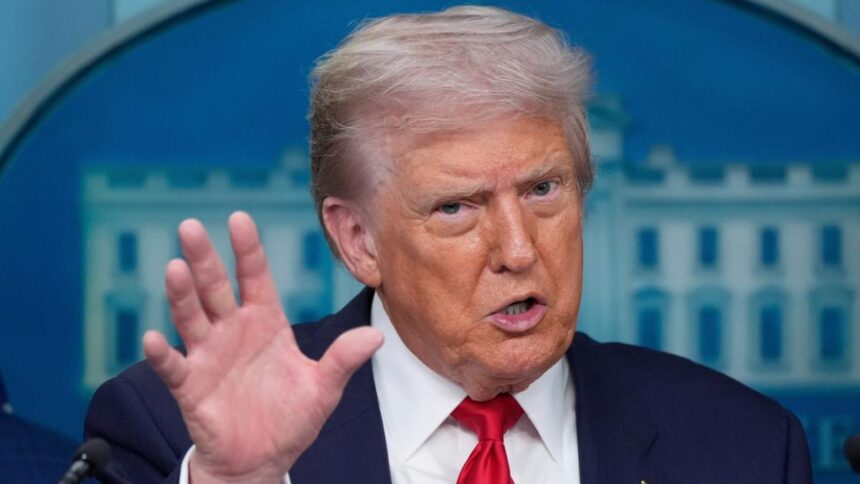
Tensions in the Middle East have escalated again and on Sunday after United States President Donald Trump renewed his threats on Iran’s critical infrastructure, including power plants and bridges, should the current deadlock in negotiations persist.
This aggressive stance comes amid renewed pressure on Iranian leaders to secure a lasting deal.
Trump said he was sending a delegation to Pakistan on Monday for negotiations, as he renewed his threats on Iran’s infrastructure if it didn’t agree to a deal.
“NO MORE MR. NICE GUY!” the American leader declared on Sunday in a post on his Truth Social account, saying that without a deal, Washington was “going to knock out every single Power Plant, and every single Bridge, in Iran”.
Iran and the United States, along with Israel, are three days away from the end of a two-week ceasefire that halted the Middle East war started by surprise US-Israeli strikes on Iran on February 28.
There has so far been only a single, 21-hour negotiating session held in Islamabad on April 11 that ended inconclusively, though groundwork for fresh talks continued afterwards.
“We’re offering a very fair and reasonable DEAL, and I hope they take it,” Trump said in his post.
This comes after Tehran moved to close off the vital Strait of Hormuz, through which a fifth of the world’s oil and liquefied natural gas travel in peacetime, at the start of the war, hammering the global economy and roiling markets.
Having failed to force it open again, Trump countered with a US naval blockade on Iranian ports in an attempt to cut off Tehran’s oil revenues.
Iran briefly reopened the strait on Friday in recognition of an Israel-Hezbollah ceasefire in Lebanon, but closed it again the following day in response to the US maintaining its blockade.
Iran’s Revolutionary Guards warned that any attempt to pass through the strait without permission “will be considered cooperation with the enemy, and the offending vessel will be targeted”.
“If America does not lift the blockade, traffic in the Strait of Hormuz will definitely be limited,” Ghalibaf said.
Iranian foreign ministry spokesman Esmaeil Baqaei on Sunday said the blockade was “a violation” of the ceasefire and illegal collective punishment of the Iranian people.