

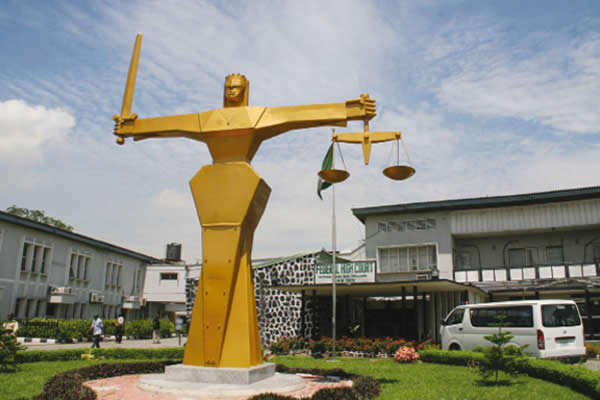
A Federal High Court in Abuja has affirmed the Independent National Electoral Commission (INEC’s) powers to fix primary election timetable for political parties ahead of the 2027 general elections.
Presiding Judge, Justice J.K. Omotosho delivered the judgment on May 26, 2026, in a suit filed by the Social Democratic Party (SDP) challenging aspects of INEC’s revised timetable and schedule of activities.
A Certified True Copy of the judgment, dated May 26, 2026, confirmed that the court upheld INEC’s powers under the Constitution and the Electoral Act 2026 to issue an election timetable, including deadlines for party primaries and related preparatory processes.
The decision directly addresses and contrasts with a prior Federal High Court ruling from May 20-21 that had nullified key portions of INEC’s guidelines.
The court declared that an election timetable constitutes “a chain of events or actions” that legitimately includes timelines for the submission of party membership registers and the conduct of primaries.
Justice Omotosho affirmed that INEC is constitutionally and statutorily empowered under the 1999 Constitution (as amended) and the Electoral Act 2026 to issue and, where necessary, alter election timetables.
The judge upheld INEC’s right to request membership registers from political parties and to set timeframes for organizing primaries.
This strengthens INEC’s role in coordinating a structured electoral process and preventing last-minute chaos in candidate nominations and logistics.
“This honourable court hereby declares that the Election Timetable is a chain of events or actions which include submission of the membership register of political parties… and fix timeframes within which political parties are to organize their primary elections,” the court ruled.
“This honourable court hereby declares that the Independent National Electoral Commission is empowered by the Constitution of the Federal Republic of Nigeria, 1999 (as amended) and the Electoral Act, 2026 to issue a timetable for elections and to even alter the same as it deems fit,” Justice Omotosho stated.
However, the court partially sided with the SDP by ruling that INEC cannot unlawfully shorten the statutory 120-day window provided under Section 29(1) of the Electoral Act 2026 for the submission of candidates’ particulars.
It also voided specific INEC deadlines (such as August 29 and September 16, 2026, for certain nomination forms) and ordered the commission to amend its timetable to fully align with Sections 29(1) and 31 of the Act.
The ruling comes amid an ongoing legal dispute over INEC’s election guidelines for the 2027 polls.
This latest court judgment on INEC’s powers on the election timetable contrasts with a separate judgment delivered by Justice Muhammed Umar in a suit filed by the Youth Party.
Justice Umar had earlier voided INEC’s directive requiring political parties to submit membership registers by May 10 as a condition for participation in the elections.
Justice Umar held that the commission exceeded its powers, ruling that such directives conflicted with Section 29(1) of the Electoral Act 2026, which provides timelines for the submission of candidates’ particulars.
Following that decision, INEC has approached the Court of Appeal in Abuja, seeking to overturn the ruling and obtain a stay of execution pending the determination of its appeal.
The commission, through Senior Advocate of Nigeria (SAN) Alex Izinyon, is advancing nine grounds of appeal, arguing that its guidelines were lawfully issued to ensure proper preparation for the elections.
The conflicting judgments now present divergent interpretations of INEC’s regulatory authority – one affirming its power to set timelines for party primaries, and the other restricting it from imposing deadlines that conflict with statutory provisions – adding fresh legal complexity to preparations for the 2027 general elections.