
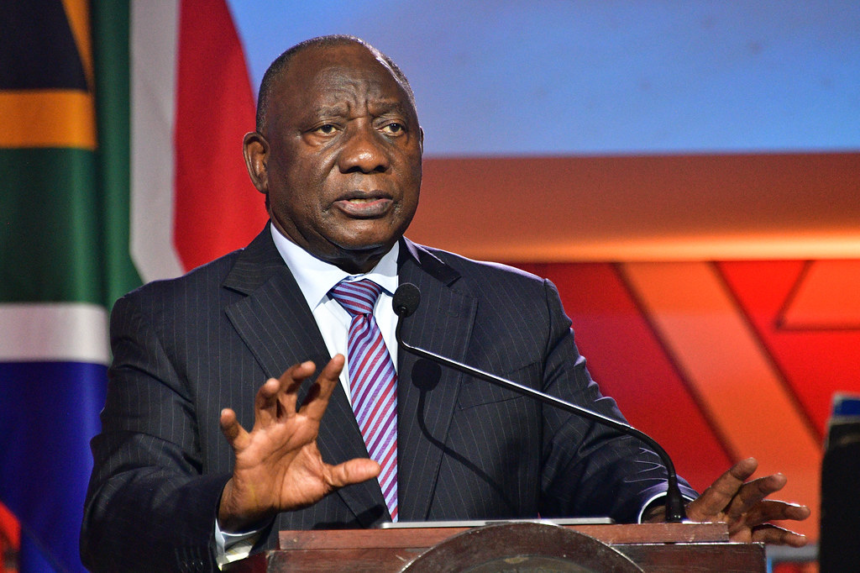
As the highly publicized June 30 deadline regarding undocumented immigrants nears, President of South Africa Cyril Ramaphosa has issued a stern warning against vigilante groups attempting to enforce an unapproved, arbitrary exodus.
In recent days, confusion has mounted across South Africa due to a June 30 deadline for what has been described as illegal immigrants.
These vigilante groups had declared that all undocumented foreign nationals must leave the country by June 30 or face immediate arrest and deportation.
Speaking firmly against the rising tensions, Ramaphosa condemned any attempts by private citizens or political factions to bypass constitutional rule.
In a message to the nation on Monday titled “Protest is both a right and a responsibility,” Ramaphosa acknowledged growing public concerns over undocumented immigration and its impact on communities.
He said: “Tomorrow, 30 June, marks the date that several groupings have identified for protests against undocumented immigration in South Africa.
“South Africans have raised deep concerns about illegal immigration, border management, pressure on public services, criminal syndicates that exploit our immigration system and the impact these challenges have on communities.
“These concerns are real and they deserve to be heard.”
The president said the right to protest is protected under South Africa’s Constitution but stressed that constitutional freedoms do not permit threats, intimidation, vandalism or violence.
“The right to protest is enshrined in our Constitution. It is a credit to our robust democratic order that people can express their grievances openly.
“But the right to protest and freedom of expression does not allow people to threaten or intimidate others, or to engage in acts of vandalism or violence,” he stated.
Ramaphosa said the government recognises the need for reforms to the country’s immigration system and is already implementing measures to strengthen border management, improve visa and asylum processes, and tackle corruption.
“Government has accepted that our immigration system requires substantial reform.
“We are strengthening border management, increasing enforcement against undocumented immigration, improving the integrity of the asylum and visa systems, and taking action against corruption that has weakened immigration control,” he declared.
He added: “We also recognise that where our systems have failed, they must be corrected. Where corruption has enabled illegal immigration, those responsible must be held accountable. Where enforcement has been inadequate, it must improve.”
The president said consultations had been held with traditional leaders, labour unions, business groups, religious organisations and other stakeholders, many of whom have backed government efforts and called for tolerance and respect for the rule of law.
While recognising citizens’ right to demonstrate, Ramaphosa warned that criminal acts committed during protests would not be tolerated.
Ramaphosa said, “Freedom comes with responsibility. The right to protest is one of the defining freedoms of our democracy, but every right carries corresponding responsibilities.
“Those who intend to protest should do so peacefully, lawfully and with respect for the rights, dignity and safety of others.”
“Where there is criminal conduct, those responsible will be held accountable and the law will take its course.”
The president also emphasised that many foreign nationals residing in South Africa are in the country legally and contribute positively to society.
“Some foreign nationals who live in South Africa are here lawfully.
“They work, study, raise families, invest in our economy and contribute positively to our society. They too are entitled to the protection of our laws and our Constitution,” he asserted.