
The government of Nigeria has summoned the South African envoy to Nigeria to a meeting in Abuja following concerns over the recent spike in xenophobic attacks.
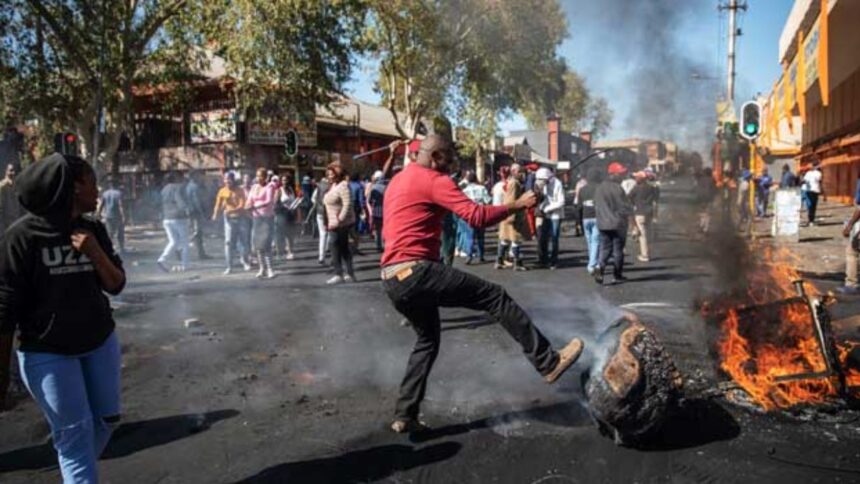
Pan-Atlantic Kompass had reported that the Xenophobic attacks surged over recent protests targeting foreigners and attacks on Nigerian citizens and their businesses in the country.
Reacting to the development, the government of Nigeria in a statement issued by the spokesperson for the Ministry of Foreign Affairs, Kimiebi Ebienfa, said it has convened a meeting with the South African envoy to Nigeria.
The meeting is scheduled to take place on Monday at the headquarters of the Ministry of Foreign Affairs.
The ministry stated that the engagement was aimed at addressing developments that could strain diplomatic ties between the two nations, which have historically maintained cordial relations.
“The Ministry of Foreign Affairs of the Federal Republic of Nigeria has extended an invitation to the acting High Commissioner of the Republic of South Africa for a meeting scheduled to take place on Monday, May 4, 2026, at the ministry’s headquarters in Abuja.
“The objective of this engagement is to formally convey the Nigerian Government’s profound concern regarding recent events that have the potential to impact the established cordial relations between Nigeria and South Africa,” the statement said.
The ministry noted that discussions at the meeting would centre on the ongoing demonstrations by groups in South Africa, as well as reported cases involving Nigerian nationals.
“Discussions will primarily focus on the ongoing demonstrations by various groups within South Africa and the documented instances of mistreatment of Nigerian citizens and attacks on their businesses,” the statement said.
While acknowledging rising tensions among Nigerians over the situation, the Federal Government called for restraint and assured citizens of its commitment to their safety abroad.
“The ministry is aware of the growing discontent among Nigerians concerning the treatment of their nationals in South Africa.
“Nevertheless, it implores the Nigerian public to remain calm and reiterates the Federal Government’s commitment to protecting the rights and well-being of Nigerian citizens residing in South Africa,” the statement added.
Violent anti-foreigner protests erupted in cities such as Pretoria, Johannesburg, Durban, East London, and parts of KwaZulu-Natal, resulting in harassment, looting, property damage, and injuries.
This has triggered fear and panic within the diaspora community, with the Nigerians in Diaspora Commission directing Nigerian business owners to temporarily shut down to minimise risks and avoid losses.
The protests, according to reports, are being driven by community groups, anti-immigration organisations, and social movements such as Operation Dudula, the March and March Movement, and similar local initiatives, often under the banner of tackling illegal immigration and unemployment.
The demonstrations are organised by groups accusing migrants of causing economic hardship and crime, with activists demanding the deportation of undocumented foreign nationals, particularly those from African countries such as Nigeria, Ghana, Zimbabwe, Mozambique, and Somalia.
Recall also that the Nigerian Consulate General in Johannesburg recently confirmed that the two victims, Amaramiro Emmanuel and Ekpenyong Andrew, were killed in separate incidents linked to the attacks.
The Consul-General, Ninikanwa Okey-Uche, disclosed in a statement on Monday that Emmanuel died from injuries allegedly sustained after being beaten by personnel of the South African National Defence Force on April 20.
Andrew, she said, was apprehended on April 19 in the Booysens area of Pretoria following an alleged altercation with members of the Tshwane Metro Police, and his body was later discovered at the Pretoria Central Mortuary.