
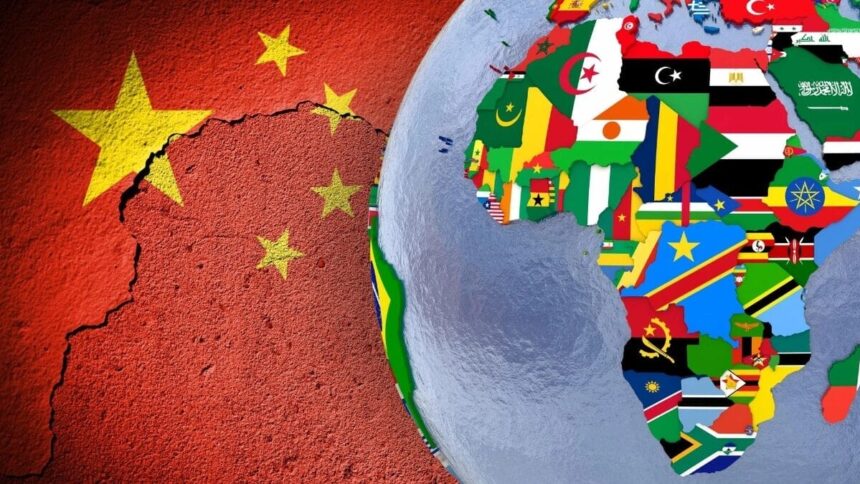
China has officially launched its zero-tariff policy for Africa, granting duty-free access to its market for goods from 53 African nations with diplomatic ties.
The policy became effective on May 1, 2026. This expansion eliminates tariffs on nearly all imports from these countries until April 30, 2028, positioning China as the first major economy to offer such unilateral, full-coverage preferential treatment to the continent.
The policy builds on an earlier initiative that provided zero-tariff treatment to 33 least-developed African countries since December 2024. It now extends to additional economies including South Africa, Nigeria, Kenya, Egypt, and others, creating fresh opportunities for African exporters amid rising global protectionism.
Under the new framework, tariffs—previously as high as 30% on certain goods—are removed across 100% of tariff lines for qualifying African products. The first shipment under the expanded scheme arrived in Shenzhen on May 1, consisting of 24 metric tons of South African apples, which cleared customs swiftly.
This zero-tariff for African countries by China is expected to boost diverse exports beyond traditional raw materials, including agricultural products like Kenyan tea and avocados, Egyptian citrus, Nigerian cocoa, South African wine, and processed goods. Chinese officials describe it as a “win-win” that supports African industrialization and shared development.
For business owners, the policy opens a pathway into one of the world’s largest consumer markets, lowering long-standing barriers to entry and pricing competitiveness.
At the same time, state governments may see it as a strategic avenue to diversify revenue streams, shifting focus from traditional income sources toward export-led growth and deeper integration into global value chains.
When the policy was announced in February, a time frame for the deal was not stated. As such, it was widely perceived as a long-term move. However, in April, the Customs Tariff Commission of the state council announced that the policy will run from May 1, 2026, to April 30, 2028.
The policy is expected to act as a temporary buffer while China negotiates a longer economic partnership contract for shared development (CADEPA) with African states.
It is important to note that the zero tariff only applies to the least-developed countries (LDCs) in Africa, of which there are only 32 recognised by the UN Trade and Development (UNCTAD), excluding Nigeria. However, China has listed 33 LDCs in Africa as beneficiaries of this zero-trade policy. It is unclear which country was included as the 33rd LDC.
Some LDCs in Africa include Rwanda, Senegal, Tanzania, Angola, and Madagascar.
For non-LDCs like Nigeria, Kenya, and South Africa, China will grant the zero-tariff treatment in the form of a preferential tariff rate.
This means only products under tariff quotas, with in-quota tariff rates, will be reduced to zero, while products in the out-of-quota tariff rates will remain unchanged.
The in-quota rate is a low tariff (e.g., one percent on wheat) applied to imports up to an annual quota limit (e.g., 9.6 million tons for wheat). This encourages controlled imports to meet domestic needs without fully protecting local producers.
Once the quota fills, the out-of-quota rate kicks in — much higher (e.g., 65 percent on wheat) — making excess imports expensive and discouraging oversupply.
While these various agreements run for LDCs and non-LDCs, China will continue to negotiate the signing of CADEPA.
CADEPA is a free trade agreement between China and Africa that aims to reduce tariffs in accordance with the World Trade Organisation (WTO) rules.
According to the WTO, China, alongside over two dozen African nations, is a developing country. Therefore, China’s offer of tariff preference to its African counterparts outside the LDC classification is not permitted by the WTO.