

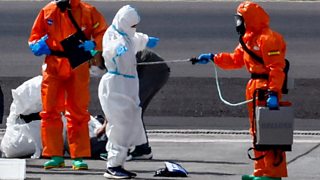
The Nigeria Centre for Disease Control and Prevention (NCDC) has officially initiated an Ebola emergency watch across Lagos, the Federal Capital Territory (FCT), and eight other states.
The NCDC said the decision follows a dynamic risk assessment triggered by an escalating outbreak of the Bundibugyo strain of the virus in the Democratic Republic of Congo (DRC) and Uganda.
While the NCDC confirmed there are currently zero cases within Nigeria, the country’s extensive international travel hubs and porous land borders have left health authorities taking absolutely no chances.
The NCDC Director-General, Dr. Jide Idris, announced that a total of 21 states have been flagged, but ten specific regions are bearing the brunt of the immediate Ebola emergency watch protocols.
Alongside Lagos and the FCT, the high-risk categorization includes Rivers, Kano, Enugu, Borno, Akwa Ibom, Cross River, Taraba, and Adamawa states.
Because these areas house major international airports, active seaports, and high-density cross-border trade networks, they have been mandated to immediately activate their Public Health Emergency Operations Centres.
“The immediate objective of our national preparedness and readiness efforts is to ensure that every state and the FCT can reasonably detect, contain, and respond swiftly to any suspected case while protecting health workers and sustaining essential health services,” the NCDC stated.
According to the NCDC, 1,077 suspected cases and 247 deaths have already been reported in Uganda and the Democratic Republic of Congo, with a fatality rate of 24.6 per cent.
It added that the outbreak has also triggered international concern, with suspected cases reportedly identified in India, while Canada announced temporary restrictions on travel applications involving residents of Uganda, DRC, and South Sudan.
Uganda has also reportedly introduced border closure measures to contain the spread.
The NCDC stressed that the Bundibugyo strain differs from the Zaire Ebola strain, which existing vaccines and antibody treatments primarily target.
“The current Bundibugyo virus outbreak has no licensed vaccines or approved targeted therapeutics,” the advisory warned.
Health officials also cautioned that Ebola symptoms could initially resemble malaria, Lassa fever, or other common illnesses, making early detection more difficult.
“Health workers must not wait for bleeding before suspecting Ebola in any patient with compatible symptoms and relevant travel or exposure history,” the agency said.
As part of emergency preparedness measures, the agency said its National Emergency Operations Centre has already been activated in alert mode to coordinate nationwide response efforts.
State governments were directed to immediately activate Ebola preparedness structures, identify isolation centres, intensify surveillance at entry points, equip frontline health workers with personal protective equipment, and begin public sensitisation campaigns to counter panic and misinformation.