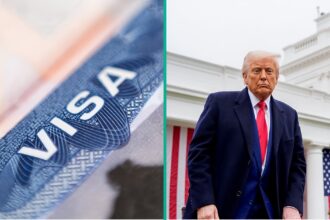

The administration of United States (U.S) President Donald Trump has suspended green card applications from Microsoft, Adobe, and several major tech giants.
This means that these tech giants will no longer be eligible to offer a pathway to employment-based permanent residency.
On the other hand, the Trump administration has launched investigations into nine leading U.S universities over alleged visa program abuses.
The latest brake on green card applications from tech giants is framed as a crackdown on fraud aimed at protecting American jobs.
U.S. Vice President JD Vance and Labor Secretary Keith Sonderling announced the measures at a White House press conference.
He declared that the Labor Department will no longer accept new Permanent Labor Certification (PERM) applications or process pending ones involving the named companies.
Pan-Atlantic Kompass reports that PERM is a required step for most employment-based green cards; employers must demonstrate that hiring a foreign worker will not adversely affect U.S workers’ wages or opportunities.
Companies Targeted in the Green Card Suspension
The suspended firms are:
– Microsoft
– Adobe
– Cognizant
– Infosys
– Tata Consultancy Services (TCS)
– Wipro
– HCL Technologies
– Capgemini
Vance singled out Microsoft, stating there has been “no company in the United States, unfortunately, that has abused the system more than Microsoft.”
He cited the company laying off thousands of American workers while benefiting from thousands of H-1B visas and nearly 3,000 green cards. Sonderling noted that since 2009 these companies had sought nearly three million foreign workers and received over 230,000 H-1B approvals and more than 100,000 permanent labor certifications.
Microsoft has said a large share of its recent H-1B filings involved extending or changing status for existing employees rather than new hires. Other major tech employers such as Amazon, Meta, and Google were not included in the suspension. Officials indicated the bans on green card applications from tech giants would remain in place “as long as it needs to.”
The move follows earlier administration steps to tighten skilled-worker immigration, including higher fees and other restrictions on H-1B petitions.
Probes Opened Into Top Universities
At the same time, the administration said it is investigating nine universities for alleged misuse of the J-1 exchange-visitor visa program. Officials claim the schools have used the temporary educational and cultural exchange visas in ways that undercut American wages and potentially involve foreign influence or improper relationships affecting federally funded research. Subpoenas have already been served.
The universities named are:
– Harvard University
– Yale University
– Stanford University
– Brown University
– Massachusetts Institute of Technology (MIT)
– University of Pittsburgh
– University of California, Davis
– California Institute of Technology (Caltech)
– Arizona State University
Vance remarked that “something weird is going on at these universities.” The probes examine whether the J-1 program, often used by international scholars, researchers, and students, has been abused.
Pan-Atlantic Kompass also reports that these actions form part of a wider Trump administration effort to reduce pathways to permanent residency for foreign-born skilled workers and prioritize American labor.
The H-1B program has long been a primary route for tech talent, with many later sponsored for green cards via PERM. Critics of the programs argue some employers use them to lower labor costs; supporters say they fill genuine skill gaps critical to U.S. competitiveness in technology and research.
Thousands of foreign tech workers at the affected companies now face uncertainty about their path to permanent residency. Pending applications are on hold, and new sponsorships are blocked during the suspension. Universities under investigation could see heightened scrutiny of their international scholar and student programs.
Microsoft and other companies have previously defended their use of visa programs as necessary for specialized talent. Industry observers note the suspensions could disrupt talent pipelines for Silicon Valley and IT services while universities face questions over research and exchange programs.
The announcements come amid ongoing midterm election considerations and follow other recent immigration policy shifts targeting skilled nonimmigrant visas and related pathways. Further details on the duration of the suspensions or outcomes of the university probes have not been specified.