
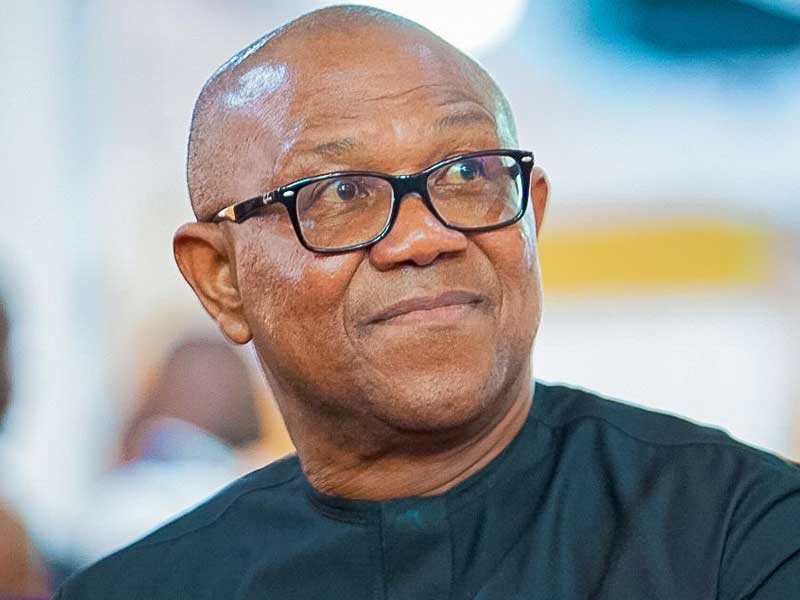
The 2027 presidential candidate of the Nigeria Democratic Congress (NDC) Peter Obi’s comments at a Manchester town hall meeting that have thrust diaspora remittances into the centre of Nigeria’s political conversation.
This has sparked debate over family support, economic dependence, and governance ahead of the 2027 elections.
The NDC presidential candidate addressed supporters in the United Kingdom on Sunday.
He told Nigerians abroad that relatives and others at home frequently request financial help and urged them to respond differently.
“You have people at home in Nigeria today who are begging you for money. Tell them no! Let’s put somebody who has proven to be productive,” Obi said.
He argued that continuous remittances provide temporary relief but do little to fix the root causes of hardship, which he linked to poor leadership. Obi encouraged diaspora Nigerians to use conversations with family members to push for accountable governance and support leaders with a record of better resource management.
Clarification After Media Coverage
The comments quickly circulated online and in Nigerian media, with some headlines framing them as a call for Nigerians in the diaspora to stop sending money home until the ruling All Progressives Congress (APC) is voted out. Critics said the advice risked worsening hardship for vulnerable families.
Obi’s media office and the candidate himself moved to clarify the position. In a post on his verified X account on Tuesday, Obi wrote under the heading “My Message Has Been Twisted.”
“I deeply appreciate Nigerians in the diaspora who work tirelessly and make enormous sacrifices to support their families back home. Their remittances pay for school fees, hospital bills, rent, and feeding expenses. Their patriotism and sacrifices deserve our profound respect,” he stated.
“I never asked them to abandon their loved ones. My concern is that Nigeria should not remain a country where millions depend on relatives abroad for basic survival. Our goal must be to build a nation that provides jobs, affordable healthcare, quality education, and economic opportunities for its citizens.”
He added: “Political opponents may twist my message, but the truth remains clear: I am not asking Nigerians abroad to abandon their families. I am advocating for a Nigeria that will no longer abandon its own people.”
Why Diaspora Remittances Matter
Nigeria relies heavily on money sent home by citizens living overseas. These inflows support millions of households with daily essentials, education, and healthcare. They also form a major source of foreign exchange for the country, often ranking alongside or above oil revenues in impact on ordinary families.
For many in the diaspora, particularly in the UK, United States, Canada and elsewhere, sending money is both a practical necessity and an emotional duty. Obi’s comments highlighted the tension between short-term family support and the longer-term desire for a self-sustaining Nigerian economy.
According to the Central Bank of Nigeria (CBN), diaspora remittance inflows through International Money Transfer Operators (IMTOs) reached $3.8 billion in the first seven months of 2026, marking a 50.2% increase compared to the same period in 2025.
Formal inflows hit a record $947 million in July 2026, while H1 2026 saw $2.85 billion (a 38.2% year-on-year increase). Full-year 2025 remittances ranged between $21.8 billion and $22.79 billion.
These figures put a number on what Obi’s comments on diaspora remittances touched on. Remittances are a household lifeline and also a macroeconomic input the government is actively courting. The CBN is treating a traditionally social source of income as a monetary policy tool. Any call to reduce informal family giving therefore lands on both a personal and a policy nerve.
Reactions and Debates
The remarks divided opinion. Some opposition parties, including voices from the Labour Party, New Nigeria Peoples Party and Social Democratic Party, criticised the suggestion that reduced remittances could pressure political change, warning it might increase suffering without guaranteed results.
Supporters of Obi, including elements of the Obidient movement, defended the message as a call to confront systemic problems rather than an instruction to cut off loved ones. They framed it as an appeal for diaspora Nigerians to pair financial help with civic pressure for better leadership.
This development has shown how diaspora remittances remain both an economic lifeline and a political flashpoint. As Nigeria heads toward the 2027 general elections, conversations about governance, productivity and the role of citizens abroad are intensifying.
Obi’s comments have kept the focus on a core question for many families: how long should diaspora remittances serve as a substitute for functioning public systems that deliver jobs, healthcare and opportunity at home?