
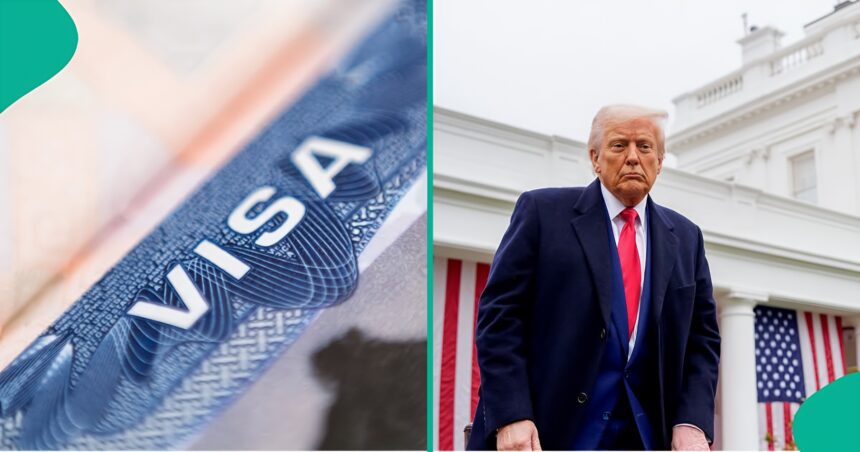
A federal judge in Boston has fully vacated a United States President Donald Trump’s rule that would have imposed a four-year limit on stays for international students, exchange visitors, and foreign journalists, preserving the longstanding “duration of status” system.
On November 16, 2026, U.S. District Judge F. Dennis Saylor IV of the District of Massachusetts granted summary judgment to a coalition of higher education groups, universities, educators, and labor unions.
He set aside Trump’s four-year limit under the Administrative Procedure Act, finding it arbitrary, capricious, an abuse of discretion, and not in accordance with law.
The decision means F-1 academic students, J-1 exchange visitors, and I-visa media representatives continue under the decades-old framework.
They may remain in the United States for as long as they pursue their authorized programs and maintain lawful status, with no fixed end date on their Form I-94. Schools continue issuing updated Form I-20 and DS-2019 documents as needed, and the traditional 60-day grace period for F-1 students remains in place.
Recall that DHS finalized the rule on July 17, 2026. It sought to replace duration of status with fixed admission periods of no more than four years for most F-1 and J-1 visa holders.
Those needing additional time, including many PhD, medical, and other longer-degree students, would have been required to apply for an extension of stay, subject to discretionary review. Foreign journalists on I visas faced a 240-day limit.
The rule also restricted academic mobility, limiting students’ ability to change educational objectives, transfer institutions, or pursue multiple degrees at the same level. DHS cited fraud prevention and national security concerns as justifications.
The regulation was scheduled to take effect September 15, 2026, but Judge Saylor issued a nationwide postponement the day before.
In his ruling, Judge Saylor determined DHS failed to properly weigh the rule’s costs and benefits, adequately justify the measures based on its stated fraud and national security goals, consider less burdensome alternatives (such as improvements to the existing Student and Exchange Visitor Information System, or SEVIS), or meaningfully respond to significant public comments.
He further ruled that restrictions on academic studies exceeded DHS’s statutory authority under the Immigration and Nationality Act, noting they were not reasonably related to the purpose of the F-1 program. “Put bluntly, DHS is seeking to prevent or discourage the very activity—providing educational opportunities for foreign students in the United States—that Congress sought to permit and encourage,” the judge wrote in related findings.
Reacting to the ruling that scrapped Trump’s four-year limit, Miriam Feldblum, president and CEO of the Presidents’ Alliance on Higher Education and Immigration, noted, “if implemented, this rule would have further weakened our ability to attract international talent, disrupted educational plans, and burdened campuses”.
She said the ruling was a “clear and important victory” for international students and scholars and the colleges and universities that welcome them.
Feldblum added, “Preserving Duration of Status gives students greater certainty as they pursue their education and allows institutions to support their academic progress without arbitrary hurdles and unnecessary barriers.
“The harmful consequences of the current administration’s policy actions and efforts are already evident in the significant declines in international student enrollment and interest we are witnessing,” she added.
Fanta Aw, executive director and CEO of NAFSA: Association of International Educators, said the outcome “underscores the importance of defending international education through principled, strategic, and sustained advocacy”.
“At a time when uncertainty continues to affect our field, this decision is a powerful reminder that our collective voice matters and that standing firm in defense of educational opportunity can make a meaningful difference for institutions, students, and this nation,” she said.
Randi Weingarten, president of the American Federation of Teachers (AFT), said the ruling would have “resounding impacts for generations of scientists and scholars from every corner of the globe that make America the worldwide leader in cutting-edge research”.
“We stand united with our 420,000 higher education members, international and American alike, so they can continue to pursue difficult questions, challenge conventional wisdom, publish findings without political interference and make US colleges and universities the envy of the world,” she said.