
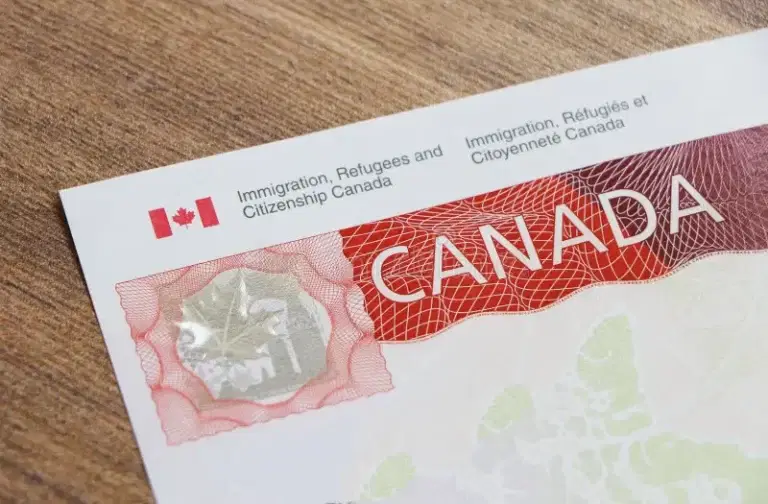
Nigeria has been excluded from a specialized visa initiative after Immigration, Refugees and Citizenship Canada (IRCC) highlighted 28 African nations eligible for its special study visa pathway in Canada.
The updated eligibility roster for the Francophone Minority Communities Student Pilot (FMCSP) covers 33 countries globally across Africa, the Middle East, and the Americas.
While 11 West African nations made the cut, including neighboring Bénin, Cameroon, Chad, and Niger, Nigeria was notably left off the list.
Nigeria’s exclusion stems directly from the demographic and linguistic mandate of the program rather than a diplomatic or visa ban.
It was gathered that Canada designed the special study visa specifically to bolster French-speaking minority communities across Canadian provinces and territories outside Quebec.
To qualify for the list, a nation must meet two primary benchmarks:
- Hold membership in the Organisation internationale de la Francophonie (OIF).
- Be situated in a region that historically experienced high study permit refusal rates before the pilot’s launch.
Because Nigeria is an Anglophone (English-speaking) country and is not a member of the OIF, its citizens do not qualify for this French-focused stream, regardless of an individual applicant’s personal fluency in French.
The 28 eligible African countries are Benin, Burkina Faso, Burundi, Cabo Verde, Cameroon, Central African Republic, Chad, Comoros, Democratic Republic of the Congo, Republic of the Congo, Côte d’Ivoire, Djibouti, Equatorial Guinea, Gabon, Guinea, Guinea-Bissau, Madagascar, Mali, Mauritania, Mauritius, Morocco, Niger, Rwanda, São Tomé and Príncipe, Senegal, Seychelles, Togo and Tunisia. Egypt is also eligible but is classified separately under the Middle East.
To qualify, applicants must be citizens of one of the eligible countries, demonstrate French-language proficiency of at least level 5 on the NCLC scale in speaking, listening, reading and writing, and secure admission into a participating Canadian institution.
They must also enrol in a full-time post-secondary programme lasting at least two years, leading to a diploma or degree, with more than 50 per cent of classes taught in French.
Applicants must demonstrate sufficient funds to cover tuition, living expenses and transportation.
The programme’s 2026–2027 intake opened on August 26, 2026, with a limit of 2,970 study permit applications until August 25, 2027.
Among the participating institutions are the University of Ottawa, York University, Université de Moncton, Université de Saint-Boniface, Collège La Cité, and Université Sainte-Anne.
One of the major attractions is the opportunity for eligible graduates to apply for Canadian permanent residence. However, completing a programme does not automatically guarantee permanent residency, as applicants must meet additional immigration conditions.
The permanent residence application pathway is scheduled to open in winter 2027.