
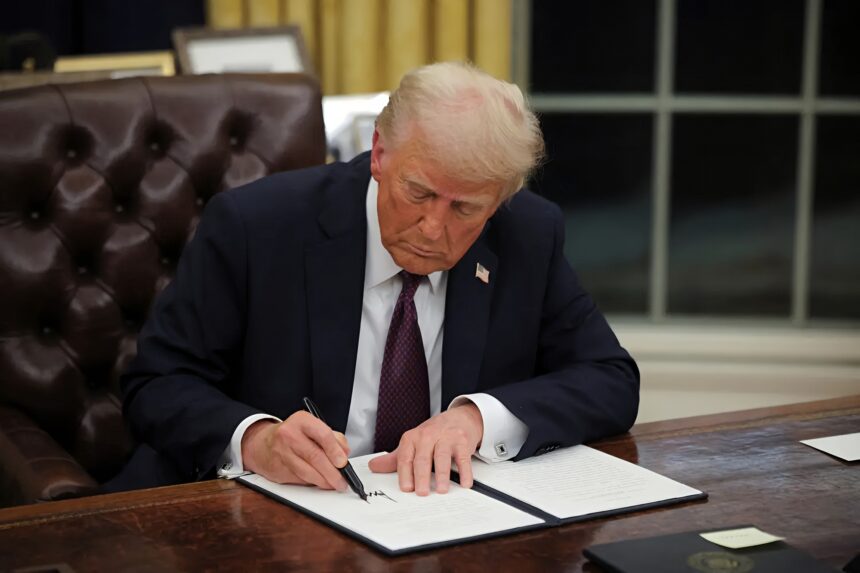
The administration of United States (U.S) President Donald Trump has sworn in 82 new immigration judges amid a move to speed up deportation cases.
U.S Justice Department officials announced Thursday that this group represents the largest single class of new immigration judges in the history of the Executive Office for Immigration Review (EOIR).
The hiring blitz is part of a sweeping, government-wide effort to clear a heavily congested legal backlog and drastically expedite deportation cases across the country.
The record-breaking class—comprising 77 permanent and 5 temporary judges—took the oath of office at the Department of Justice’s Great Hall in Washington, D.C.
The appointments come after a turbulent year in which the administration ousted dozens of judges appointed during previous terms, causing the overall corps to dip from over 700 to below 600.
This new U.S immigration judge brings the total number of active judges back close to the 700 mark, with officials revealing that the administration has hired a total of 153 permanent judges in fiscal year 2026 alone.
Pan-Atlantic Kompass reports that U.S immigration judges decide whether noncitizens the government is seeking to deport should be removed from the U.S. or allowed to stay.
Despite their title, immigration judges are not part of the independent judicial branch and are instead employees of the Justice Department, which runs dozens of immigration courts across the U.S., as well as an appellate immigration court.
While they’re part of the executive branch, immigration judges are expected to be neutral, and not show bias towards noncitizens or the Immigration and Customs Enforcement lawyers seeking their deportation. Still, the Trump administration has publicly referred to them as “deportation judges” in official job listings, calling on potential applicants in one ad to “deliver justice” to “criminal illegal aliens.”
As part of its mass deportation campaign, Trump’s administration has sought to overhaul the country’s immigration courts, since, in many cases, immigrants have to be issued removal orders before being deported.
That overhaul has included a purge of more than 100 immigration judges, including many appointed under the administration of former U.S President Joe Biden. Some of the judges ousted under the Trump administration have said they believe they were fired over not sufficiently pushing deportations or having backgrounds in helping or advocating for immigrants.
Over the past year, the Justice Department has also issued directives and precedent-setting orders sharply restricting when immigration judges can grant asylum or other forms of relief to those facing deportation, and when they can release those in ICE detention on bond.
The new class of immigration judges was sworn in on Wednesday in Washington, D.C., Justice Department officials said.
Most of the new immigration judges joining the Justice Department’s ranks this week had previously worked as ICE lawyers, prosecutors, or in the military, as officers, judge advocates, or other roles, according to bios provided by the U.S. Department of Justice. Some worked as state or local judges, or as lawyers in private practice.
In a statement Thursday, Acting Attorney General Todd Blanche said the Trump administration is “committed to reestablishing an immigration judge corps that is dedicated to restoring the rule of law in our nation’s immigration system.”
“This could only happen thanks to President Trump’s decisive leadership and commitment to securing our borders,” Blanche said.
This comes as Trump has intensified his move to deport those considered illegal migrants from the U.S.
Trump also introduced a third-country deportation which allowed the U.S to deport individuals to other countries other than they home-country.