
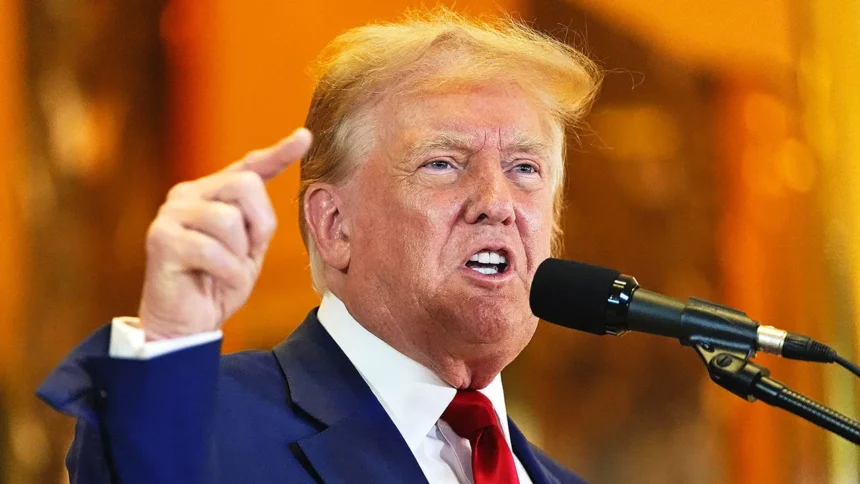
The United States President Donald Trump is reportedly shaking up immigration policies again, with U.S. student visas’ duration now on the front burner.
Reports emerging on Monday revealed that the administration of Trump has reportedly sent a proposal to the Department of Homeland Security (DHS), requesting the reduction of time limits on U.S. student visas.
It was gathered that the proposal seeks to limit student visas to two or four years. It is also believed that the proposal is the same as the one Trump floated during his first administration, which was withdrawn by the administration of former U.S. President Joe Biden.
Trump’s administration explained that the reduction of the time limit is essential to curb overstays. With the proposal making headlines again, critics have argued that the policy would force students to apply for visa extensions periodically, introducing delays, financial burdens, and uncertainty that could disrupt academic progress.
Here are the key things you need to know about the proposal;
1. Pan-Atlantic Kompass reports that the current U.S. student visas’ duration allows international students on F-1 and J-1 visas the ability to remain in the U.S. for the entirety of their academic or training programs, provided they maintain full-time enrollment. However, the proposed rule would replace this with fixed time limits on U.S. student visas, requiring students to apply for extensions to continue their studies beyond the set period.
2. The proposal suggests visa durations based on the student’s country of origin or field of study. While specific details will only be clarified upon publication in the Federal Register, this tiered approach raises concerns about discriminatory application, particularly for students from countries like Nigeria.
3. The proposed policy could also impact over 1.1 million international students in the U.S., particularly those from countries like Nigeria. International students will likely face disruptions, especially those in longer programs like PhDs, as they’d need to repeatedly apply for extensions.
4. The proposed fixed time limits on U.S. student visas could also cast uncertainty over Optional Practical Training (OPT), a program allowing international graduates to work in the U.S. for up to three years post-graduation in STEM fields.
5. The proposal could increase the burden on the United States Citizenship and Immigration Services (USCIS), a government agency that administers the country’s naturalization and immigration system.
It is estimated that the agency would face an additional 300,000 extension applications each year, which could cause knock-on delays and ultimately deter international students from the U.S.