
The UK government has officially ramped up its efforts to disrupt Russian recruitment networks that have been deceiving African nationals into the ongoing war with Ukraine.
The Foreign, Commonwealth & Development Office (FCDO) utilized its newly established Global Irregular Migration and Trafficking in Persons (GIMTiPS) regime to blacklist 35 individuals and entities.
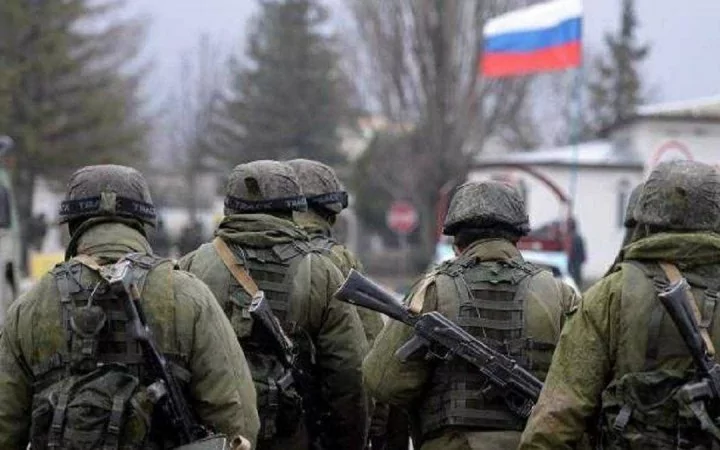
These actors are accused of luring vulnerable job-seekers from North and West Africa with promises of lucrative factory work, only to press-gang them into front-line combat or drone production plants.
According to UK Sanctions Minister Stephen Doughty, these Russian recruitment networks operate with a “barbaric” disregard for human life.
Intelligence reports indicate that many recruits, hailing from nations such as Nigeria, Egypt, Cameroon, and Côte d’Ivoire, were initially offered roles in civilian sectors.
The FCDO named one Polina Alexandrovna Azarnykh, who it said was backed by the Russian state.
According to the statement, Azarnykh has been facilitating the travel of individuals from countries including Egypt, Iraq, Ivory Coast, Nigeria, Morocco, Syria, and Yemen through Russia to Ukraine, where they are deployed with minimal training and under dire conditions to the frontline to sustain Russia’s illegal war of aggression.
“The practice of exploiting vulnerable people to prop up Russia’s failing and illegal war in Ukraine is barbaric,” the FCDO statement quoted Stephen Doughty, UK sanctions minister, as saying.
“These sanctions expose and disrupt the operations of those trafficking migrants as cannon fodder and feeding Putin’s drone factories with illicit components to target innocent civilians and vital infrastructure.”
The UK also sanctioned a network recruiting foreign migrants and putting them to work in weapons factories “through schemes like Russia’s Alabuga Start programme for drone production at a UK-sanctioned entity”.
“Russia continues to terrorise Ukraine by indiscriminately using drones, killing, and injuring innocent civilians and damaging critical infrastructure,” the statement reads.
“Russia fired the equivalent of over 200 drones per day into Ukraine in March 2026, the highest ever monthly total. Russia is likely to exceed this grim record for a second consecutive month in April.
“These attacks rely on domestic manufacturers and third-country suppliers providing key components and technical support. This new action is designed to disrupt these supply chains and hold those responsible to account by targeting the businessmen and companies fuelling Russia’s drone manufacturing capabilities.”
Some of the sanctioned targets were based in third countries, including Thailand and China. According to the FCDO, they were responsible for supplying drone components and other critical military goods to Russia.
“Among those sanctioned is Pavel Nikitin, whose company develops Russia’s VT‑40 drone — a cheap, mass‑produced attack drone which has been used extensively by Russia in its attacks on Ukraine,” the statement said.
In total, 35 individuals and entities were sanctioned.
The UK said it would remain unwavering in its support for Ukraine and defend European security by disrupting Russia’s hybrid threats.
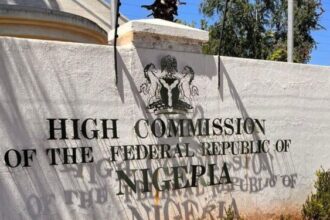
This comes after Andrey Podyelyshev, Russian ambassador to Nigeria, has distanced the Kremlin from the alleged recruitment of Nigerians as soldiers to fight in Ukraine.
Podyelyshev’s denial came after a February investigation uncovered that Africans from Ghana, Nigeria, Kenya, and Uganda were reportedly lured to Russia under the guise of civilian job offers such as drivers or security guards.
After the investigation, Ukraine said it discovered the bodies of two Nigerians in its Luhansk region who were allegedly fighting on Russia’s side in the protracted war.
More Nigerians in Russia also began to publicly appeal to the federal government seeking repatriation over claims of being lured into the Russian army.