
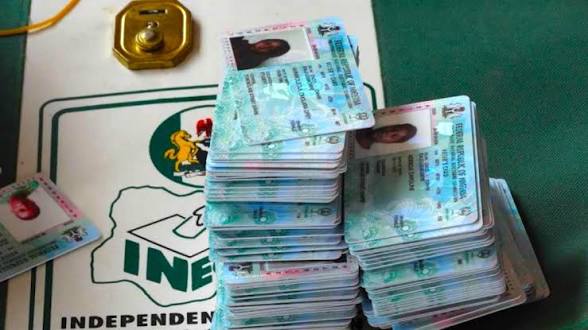
Ahead of the 2027 general elections, the City Boy Movement, a major political support group backing President Bola Ahmed Tinubu, has issued a call to young Nigerians, urging them to collect their Permanent Voter Cards (PVCs).
With the Independent National Electoral Commission (INEC) rolling out distribution updates and electoral activities gathering momentum, leaders of the movement emphasize that youth political participation remains the single most decisive factor in shaping Nigeria’s developmental path.
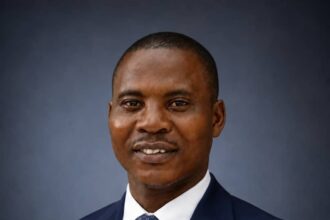
Hon. Mark Alphonsus, the City Boy Movement Coordinator for East Africa, made this appeal, urging Nigerian youths to collect their PVCs and participate actively in the 2027 general elections.
In a press statement, Alphonsus, who is also the Founder and Chief Executive Officer of Nairobi-based Amala Eko International, a Nigerian food and cultural export business, said the Tinubu administration had laid the foundation for what he described as lasting prosperity for the country.
“If you look at the developmental trajectory of Nigeria since independence, one will deduce that it has been from one lamentation to another.
“But in the last three years, we have had a President who has taken the historic bold steps of decluttering the system, thereby laying the foundation for incremental and sustainable prosperity and growth,” he said.
He pointed to “removal of the fuel subsidy, floating of the naira, stabilisation of the economy, introduction of the Student Loan, and massive investment in road infrastructure, among other reforms” as the justifications for his solicitation
Alphonsus said at the core of the City Boy Movement was the responsibility to mobilise young Nigerians to participate in the electoral process and support Tinubu’s re-election bid.
This call comes amid the preparation of the Independent National Electoral Commission (INEC) for the 2027 general elections, with the number of registered voters rising significantly ahead of the polls.
INEC’s register for the 2023 general elections contained 93,469,008 registered voters, including 37,060,399 young people aged between 18 and 34.
According to a breakdown of INEC’s data, Nigerian youths accounted for 39.65 per cent of the registered electorate, making them the largest age group in the register.
Students also constituted the largest occupational category, with 26,027,481 registered voters.
The figures shed light on the growing importance of voter mobilisation, particularly among young Nigerians, whose participation could influence the outcome of the next general elections.
Speaking further, Alphonsus explained that his assignment as City Boy Movement Coordinator for East Africa was to mobilise Nigerians in the region and encourage them to participate in the electoral process.
“There are over 17 million Nigerians in the diaspora. About half of that number are eligible to vote. In my jurisdictions, including Kenya, Uganda, Tanzania, Rwanda, Burundi, South Sudan, the Democratic Republic of Congo and Somalia, our goal is to mobilise the over 1,600 registered Nigerian voters back home for the election. There are about 3,400 Nigerians in this region,” he said.
He added that several town hall meetings and high-level engagements had been planned to strengthen the movement’s mobilisation efforts.
“I am returning to Nairobi on Monday, October 26, 2026, to implement the several strategic plans on the ground to mobilise the great Nigerian people in our jurisdiction,” he said.
Alphonsus described youth participation as a major focus of the movement, saying it was established partly to address the limited involvement of young Nigerians in elections and political leadership.
“Our goal is also to raise an army of innovative, intelligent and patriotic young Nigerians who will be leading the country in the near future,” he said.